About Kirstin Carl, LMFT

Waves Outlining

Who I Am

I hear some version of this again and again: “I thought something was just wrong with me.” There is almost always more to the story.

I am Kirstin Carl, a licensed marriage and family therapist (LMFT #53759) in Encino, California, with nearly twenty years of experience helping people make sense of their relationships and inner lives.

Nothing is wrong with you. Even so, none of us get through life unscathed; how you learned to protect yourself still shapes how you love, trust, and respond to disconnection. My work helps you weave those threads together so you have more choice in how you respond, instead of repeating the same familiar patterns.


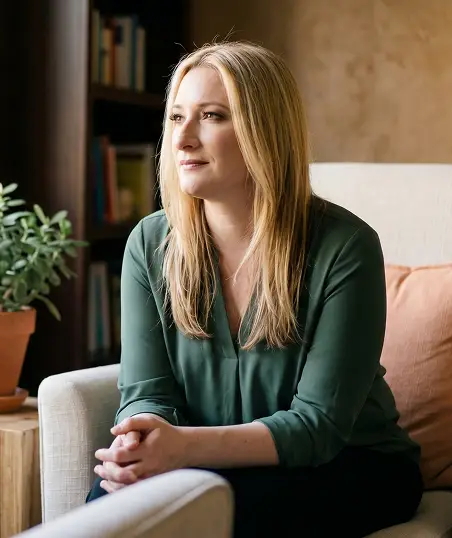
Kirstin sits on a couch

My Approach

My approach is attachment-based, which means we look at what your earliest relationships taught you about closeness, conflict, and being truly known. Those early lessons do not just live in the past. They can show up in the people you are drawn to, how you handle friction, and how you talk to yourself when something goes wrong. Understanding where these patterns came from can help you have more choice in how you respond to them now.

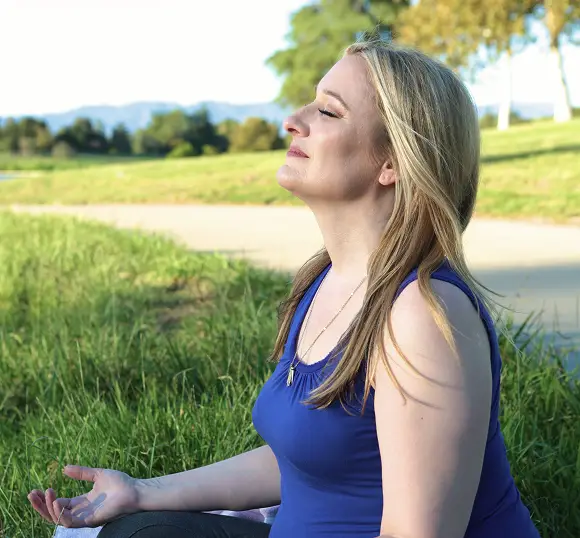
Kirstin sits cross-legged on the grass in a park
A green couch set against two plant-filled shelves

What Sessions With Me Are Like

My work is trauma-informed. With couples, I draw on Emotionally Focused Therapy (EFT) to help partners understand the cycles they get stuck in together. I am not a therapist who simply listens and nods for fifty minutes. I ask direct questions and gently point out patterns as they show up in the room between us. Sessions with me are active and collaborative, and they are not cookie-cutter.

Some people need more structure between sessions. Others need more space to be seen and heard before opening up to change. I shape the work around what is actually true for you. I do not apply any single method the exact same way with every client.

What I Offer

A woman reads a book while relaxing on a couch, positioned in front of a window that lets in bright daylight.

Trauma Therapy

Explore how painful or overwhelming experiences may influence the way you see yourself, relate to others, and respond emotionally in the present.
Two women walk hand in hand through a serene forest, surrounded by tall trees and dappled sunlight.

Attachment-Based Therapy

Make sense of how experiences of closeness, comfort, conflict, and repair can shape your expectations and responses in relationships.
A man seated at a table

Therapy for Dating and Relationships

Look more closely at who you are drawn to, what you want from relationships, and the patterns that emerge around closeness and connection.
A couple stands on the sandy beach

Couples Therapy

Understand what happens between you when tension builds and how recurring patterns can lead to conflict, distance, or disconnection.
A couple stands together in their kitchen

Therapy for Parents

Make sense of your reactions and experiences as a parent so you can respond more intentionally and make thoughtful choices about the kind of parent you want to be.

Credentials & Background

B.A. in Psychology, San Diego State University, 2005

M.S. in Counseling, University of Phoenix, Pasadena Campus, 2008

Licensed Marriage and Family Therapist (LMFT #53759), State of California

Nearly twenty years in practice, specializing in attachment-based therapy, trauma, and relationship patterns with individuals, couples, and parents in the San Fernando Valley and online across California.

Completed an externship in Emotionally Focused Therapy (EFT) through the Los Angeles Center for Emotionally Focused Therapy (LACEFT)

A chair positioned next to a small table

If you recognize yourself in any of what you’ve read here, I invite you to reach out.

Schedule a free thirty-minute phone consultation: no pressure, just a chance to see whether working together feels like a good fit.

Frequently Asked Questions

Who do you work with?

I work with a wide range of individuals and couples, including people managing high-functioning anxiety, navigating midlife transitions, or hoping to find a life partner. I also work with parents who are breaking intergenerational patterns, survivors of sexual abuse and other trauma, young adults exploring their identity and purpose, and professionals or entrepreneurs seeking greater balance, connection, and meaning in their lives.

When I was younger, I had the opportunity to attend therapy myself, and the experience changed the course of my life. Once I earned my B.A. and thought about what I wanted to do next, I kept coming back to the idea of becoming a therapist. I could not picture doing anything else that would feel as meaningful.

My own experience as a client was healing, and I wanted to offer that same experience to others. As a therapist, I want to help people break free from shame and their harsh inner critic, so they can have more self-compassion and build deeper connections with the people who matter most. I cannot imagine another career that offers the same amount of challenge and fulfillment as this one.

I start by taking a thorough history, but not by working through a checklist or form — it emerges naturally as we get to know each other. I have found that the process of therapy, not just the content, matters greatly throughout the work. The therapeutic relationship itself often reveals attachment patterns in real time, creating an opportunity for a corrective relational experience.

My work is attachment-based and trauma-informed. Depending on what brings you to therapy, I may also draw from somatic approaches, Internal Family Systems (IFS), and EMDR-informed work. With couples, I use Emotionally Focused Therapy (EFT) to help partners understand the cycles they can get stuck in together. I do not use any one approach the same way with every client; I shape the work around what you need and what we are working toward.

This is one of the most frequent questions I get from prospective clients. Although it is not possible to know in advance how many sessions you will need, clients typically stay anywhere from a few months to a few years.

It depends on what you are hoping to get out of therapy. For some, easing a current crisis is the goal. For others, working through longstanding patterns in greater depth better meets their needs.

I am out-of-network with insurance providers. If you have a PPO plan, I can provide a superbill to submit to your insurance company for potential reimbursement. As a courtesy, I am happy to file out-of-network claims electronically on your behalf — making the process quicker and easier.

Request Appointment